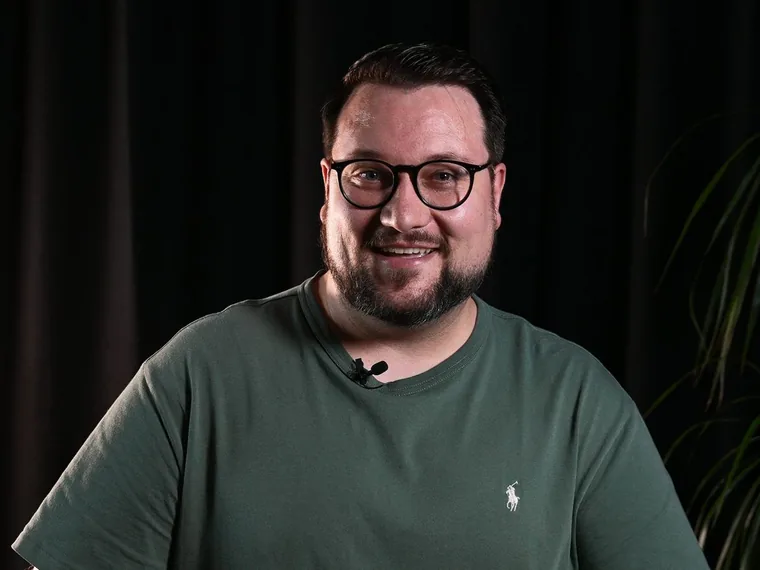
“Our new website is a complete game changer. In terms of look, it can hold its own with the sites of major corporations – and that's exactly the league we want to compete in. If you're looking for a design agency that doesn't feel like a classic agency, INSYNC is exactly right.”
Get visible where your customers actually ask: they no longer only google, they ask ChatGPT, Perplexity and Google AI. Generative engine optimization (also called GAIO, LLMO or AEO) makes sure the answer names your brand. We do it evidence-based - and you can verify every step on our own website.
4.9 stars134 reviews
4.9 stars134 reviews
GEOagencyforAIvisibility
Get visible where your customers actually ask: they no longer only google, they ask ChatGPT, Perplexity and Google AI. Generative engine optimization (also called GAIO, LLMO or AEO) makes sure the answer names your brand. We do it evidence-based - and you can verify every step on our own website.
WhatisaGEOagency?
A GEO agency optimises your website and your content to be cited and recommended inside AI answers - in ChatGPT, Perplexity, Claude, Gemini and Google's AI Overviews. Ongoing GEO work costs between €1,500 and €10,000 depending on scope, and it differs fundamentally from classic SEO: the overlap between top Google rankings and AI citations is below 20 per cent (Source: 5W Research, 2026).
At INSYNC you get GEO from a team that builds AI-readable websites instead of patching them afterwards - and that applies every single measure to its own site first.
WhatisGEO?Generativeengineoptimization.
GEO is the practice of optimising your content for generative AI systems. Where SEO makes your website rank in a list of search results, GEO makes AI assistants name your brand, cite your content and recommend you when people ask for solutions. The discipline goes by many names - GAIO (generative AI optimization), LLMO (large language model optimization), AEO (answer engine optimization) - and they all mean the same thing: visibility where answers are generated instead of links. Some people simply call it ChatGPT SEO or AI SEO: same shift, different vocabulary.
Why it matters now: a growing share of your audience starts the search for a provider inside an AI chat. If you are not there, you do not exist for those buyers - no matter how strong your Google rankings are.
Web, content and GEO - all in-house, AI-readable from day one.
Most agencies sell GEO as SEO with a new label. The data says otherwise - and we work from data, not gut feeling:
This page, by the way, is built to exactly those rules. That is not a coincidence.
Under 20 % overlap
The overlap between top Google rankings and AI citations is below 20 %, down from around 70 %. Position one on Google does not mean ChatGPT knows you exist. (Source: 5W Research, State of AI Citations 2026)
Only 12 % of cited URLs
Only 12 % of the URLs that ChatGPT, Gemini and Copilot cite rank in Google's top 10. The rest comes from pages that never show up in classic search: mentions, comparisons, industry sources. GEO is far more than on-page work. (Source: Ahrefs, AI Search Overlap Study, 2025)
AI crawlers do not render JavaScript
Anything that is not in the server-rendered HTML does not exist for GPTBot, ClaudeBot and the rest. That is why we build websites AI-readable from the ground up.
Structure beats length
Quotes, statistics and source citations lift visibility in AI answers by 30 to 40 %. Question-style headings answered in the first sentence get cited measurably more often, and a large share of all citations comes from the top third of a page. (Source: Princeton / Aggarwal et al., GEO: Generative Engine Optimization, ACM SIGKDD 2024)
WhatisthedifferencebetweenSEOandGEO?
SEO optimises for ranked lists, GEO for generated answers. The overlap is smaller than most people assume: according to 5W Research (2026), fewer than 20 per cent of AI citations match the top Google results.
RecommendedGEO (generative engine optimization)
Classic SEO
AEO (answer engine optimization)
Goal
Being cited and named inside the AI answer
Ranking in Google's list of results
A direct answer in answer boxes (AI Overview, featured snippet)
Visibility surface
ChatGPT, Perplexity, Claude, Gemini, Google AI Overviews
Ten blue links
Google AI Overviews, featured snippets, voice assistants
Where do you show up today in ChatGPT, Perplexity and Google AI - and where do your competitors? We measure share of model, citation rate and the context you are mentioned in, find the gaps and prioritise what moves the needle most. As a productised entry point: our fixed-price GEO audit from €1,500 - a solid AI visibility analysis plus an action plan you can implement without us.
02
AI-readable website structure
Server-side rendering, clean semantics, schema, llms.txt and a proper entity home with Wikidata presence: we make your website technically readable for AI crawlers and connectable to the knowledge graph. As a web agency we build it ourselves - we do not write recommendation PDFs for someone else's developers.
03
GEO optimisation of your content
Making existing pages citable and creating new content that AI systems use as a source: question structure, definition blocks, entities, comparison content and RAG-friendly chunking - the format that demonstrably gets cited. We think in query fan-out: not one keyword, but the full spread of questions an AI asks about your topic.
04
SEO and GEO combined - the AI SEO agency service
Google stays important, AI comes on top. We run both in one system: classic rankings AND AI mentions, with reporting that shows both worlds.
05
Monitoring and reporting
AI visibility is measurable: we track share of model, citation rate and sentiment - how often, where and in what context AI systems name your brand, how your knowledge graph presence develops and how all of that shifts through the work we do. No guesswork, just curves.
Ongoing GEO retainer (Growth): what is included
Five keyword articles per month
Visibility in AI answers
Google rankings and business profile
Industry sources and directories
Monthly AI and ranking monitoring
Unlimited design and development tasks
WhatdoesaGEOagencycost?
With us, GEO engagements run between €1,500 and €10,000 - from a one-off GEO audit with an action plan to an ongoing retainer covering content, technology and monitoring. The entry point is our fixed-price GEO audit from €1,500: a solid AI visibility analysis and an action plan you can implement without us.
What your case needs depends on where you start: a technically clean website needs different levers than a site AI crawlers cannot even read today. In a first call you get an honest assessment within 20 minutes - including the answer to whether GEO is the right next step for you at all.
from €1,500
GEO audit, one-off, fixed price
€1,790
Growth per month, plus €3,900 setup
€3,390
Growth Max per month, plus €4,900 setup
up to €10,000
range of GEO engagements, depending on scope
Wedonotsellanythingwedonotdoourselves
This website is our test lab. It is server-side rendered, it has a maintained llms.txt, structured data on every page and content built to citability rules.
Our GEO knowledge does not come from a webinar. It comes from our own playbook, distilled from tens of thousands of analysed data points, studies and live tests, and we apply it to ourselves every day.
Where do you stand in ChatGPT, Perplexity and the rest? We measure mentions, check technical AI readability and analyse who the AI systems recommend instead of you.
Outcome: a solid AI visibility analysis plus a prioritised action plan in plain language.
2
Structural fixes
SSR, schema, llms.txt, entity home, site architecture: the technical blockers go first.
Outcome: a website AI crawlers can actually read.
3
Content and citability
Rebuilding existing pages and creating new citation assets: definitions, comparisons, data, RAG-friendly chunks.
Outcome: the material AI systems use as a source.
4
Earned signals
Building mentions and source presence where AI systems pull their answers from.
Outcome: source status that is easier to defend later.
5
Monitoring and iteration
Watching mention rates, sharpening, expanding. GEO is a process, not a project.
Outcome: share of model, citation rate and sentiment in ongoing reporting.
GEObasicsin60seconds
The terms you will meet in every GEO conversation - short and free of buzzword fog.
GEO (generative engine optimization)
Optimising to be cited and recommended inside AI answers.
AI Overview
Google's AI answer box above the classic search results.
Citation / mention
When an AI names your brand or page as a source: the new currency of visibility.
llms.txt
A file that explains the structure and core content of your website to AI systems.
AI crawlers (GPTBot, ClaudeBot and others)
The bots AI systems use to read websites - without rendering JavaScript.
Entity / entity home
An entity is a clearly identifiable thing (brand, person, place, product). The entity home is the one page an AI treats as the official source for that entity.
Knowledge graph
The connected fact database search engines and AI systems draw entity knowledge from - you connect to it via Wikidata, for example.
RAG (retrieval-augmented generation)
The method AI systems use to retrieve matching sources before answering: content that is cleanly chunked gets found more often.
Query fan-out
The way a user question fans out into many sub-questions an AI answers internally before it cites anything.
Ghost citation
Your content gets cited, but your brand never gets named - more common than people think.
5thingsyoucandoyourselftoday
01
Create an llms.txt. It takes an hour and explains your website to AI systems.
02
Check whether AI crawlers can read your site. Open your website with JavaScript disabled. See nothing? Then GPTBot and friends see nothing either.
03
Write headings as questions and answer them in the first sentence. Question headings get cited measurably more often.
04
Put the important part in the top third of every page. A large share of all AI citations comes from there.
05
Build an honest comparison page. AI systems love comparison content as a source, especially when it is not one-sided.
That is the start. What comes after it - entity building, earned signals, monitoring - is in the handbook. See tip one live: our llms.txt
Whatclientssayaboutus
We could talk about entities and citation rates all day. It is more convincing to hear it from the companies we work with.
Alex Kurze
Director of Innovation · FRAMEN GmbH
“Our new website is a complete game changer. In terms of look it holds its own against the websites of major corporations - and that's exactly the league we want to compare ourselves with. If you're looking for a design agency that doesn't feel like a traditional agency, INSYNC is exactly right for you.”
GEO is not a consulting add-on here, it is part of how we build: we are the web agency that builds AI-readable websites itself, and the team that practises GEO on its own website every day.
200+ B2B companies have built with us
B2B companies that built their visibility with us.
Costs, the difference to SEO, measurement, timelines: everything companies want to know before they start with GEO, answered honestly.
A GEO agency makes brands visible inside AI systems: in ChatGPT, Perplexity, Claude, Gemini and Google's AI Overviews. That covers technical AI readability, citable content and building source signals - plus monitoring of how often AI systems actually name the brand.
At INSYNC between €1,500 and €10,000 depending on scope - from a fixed-price GEO audit from €1,500 to an ongoing retainer through our Growth packages (from €1,790 per month after a one-off setup from €3,900). The biggest cost driver is your starting point: technical foundation, existing content and how contested your topic is in AI answers.
Classic monthly SEO retainers sit between €700 and €3,000 per month across the market. GEO either runs as its own project (with us €1,500 to €10,000 depending on scope) or is already included in our SEO retainer, because in 2026 Google rankings and AI visibility belong together. We work out what makes sense for you in a first call.
No, it is shifting. Google remains a huge channel, but a growing share of searches is moving into AI chats. The winners serve both: classic rankings AND AI mentions. That is why we run SEO and GEO as one system, not as competitors.
SEO optimises for ranked lists, GEO for generated answers. The overlap is smaller than most people assume: according to 5W Research (2026), fewer than 20 per cent of AI citations match the top Google results. You will find the full comparison in our article SEO vs GEO.
Four names, one discipline: optimising for AI-generated answers. GEO (generative engine optimization) has established itself as the umbrella term; GAIO, LLMO and AEO describe the same field from slightly different angles.
Technical fixes work within weeks (AI crawlers can finally read the page at all), while citability and mention rates build over two to six months. Being early matters in GEO: the field is young, and whoever builds source status now defends it more easily later.
Through systematic queries: how often do AI systems name your brand for relevant questions, in what context, citing which source? We track that continuously - share of model, citation rate and sentiment - and report mention rates the way other agencies report rankings.
Especially well. B2B decision makers use AI chats to research providers and compare options, and because B2B niches are still thinly covered in AI answers, source status is easier to reach there than in consumer markets.
Usually both together, because the foundations overlap: clean structure, fast pages, good content. Our audit tells you what comes first - honestly, even when the answer is: fix the website basics first.
No. Targeted structural fixes are often enough. But if your website is client-side rendered and AI crawlers cannot read it, we will tell you straight - including your options, from a targeted fix to a full website relaunch.
Because we are both: the web agency that builds AI-readable websites itself, and the team that practises GEO on its own website every day. You do not get theory consulting, you get delivery from one team - verifiable on our own site.
RequesttheGEOhandbook
We analysed thousands of articles, studies, conference talks and our own tests on GEO and distilled the result into a handbook: what really influences AI citations, what demonstrably does nothing (spoiler: more than the industry admits) and the concrete steps to get started.