


ChatGPT SEO: how your company shows up in ChatGPT answers
More and more customers ask ChatGPT instead of Google. This guide shows step by step how your website gets cited and recommended in ChatGPT: Bing index, allowing GPTBot, server-side rendering, answer-first content, and authority beyond your own site.
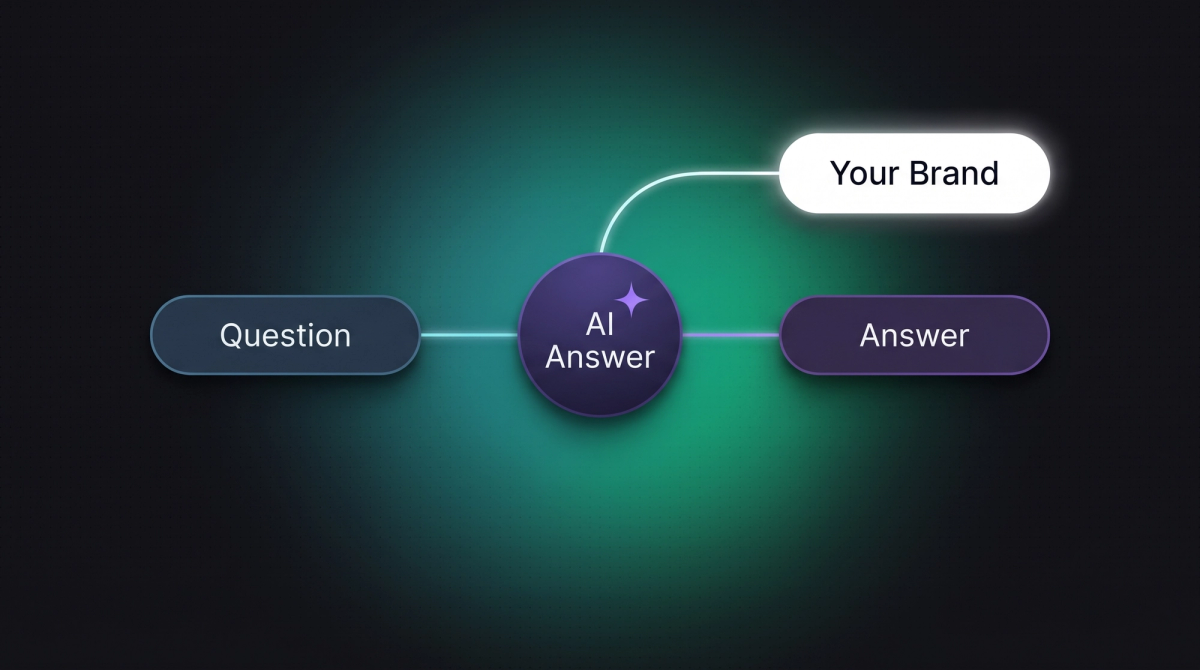
ChatGPT SEO, meaning the targeted optimization to be cited and recommended in ChatGPT, is becoming a channel of its own for companies. "Which agency builds high-quality B2B websites?" - more and more people no longer ask such questions on Google but on ChatGPT, Perplexity, or Gemini. The AI answers with a few recommendations. Whoever does not show up there is invisible to those customers.
The good news: you can actively influence whether your brand gets cited. This guide shows the concrete steps. The bigger picture is in our “SEO vs. GEO” article - this one is about the craft.
Key takeaways
- Showing up in ChatGPT means being cited or recommended when someone asks for providers in your category. Unlike Google, an answer has only a few slots. Whoever is not named is out before the comparison starts.
- ChatGPT searches live via the Bing index, not Google. Around 87% of ChatGPT citations come from Bing top results. If you are not indexed in Bing, you do not exist for ChatGPT.
- Technical foundation first: allow GPTBot and OAI-SearchBot in robots.txt and render server-side. AI crawlers do not render JavaScript. Without SSR they see an empty page.
- Write answer-first: the key statement in the first 40 words, clear questions as headings, lists, tables, and FAQ. That way passages get lifted directly.
- You get recommended when you have authority beyond your own site: reviews, directories, Wikipedia, and trade media. Expect 3 to 6 months, not days.
How does ChatGPT decide which company to recommend?
ChatGPT draws its answers from two sources. The first is training data, a snapshot of the web up to a certain cutoff. The second is live search: as soon as ChatGPT shows a small Searching, it pulls current content from a search index and builds the answer from it. For you as a company the second one matters most, because it can be influenced.
What matters is which index ChatGPT uses for that: Bing, not Google. Analyses by Seer Interactive show that around 87% of ChatGPT citations match Bing top results. From this follows an uncomfortable truth: no matter how well you rank on Google, if your page is not in the Bing index, it does not show up in ChatGPT. For local recommendations, further sources come in, above all the Google Business Profile and directories like Foursquare.
And one more thing differs from Google: an answer rarely holds more than three to five providers. There is no page two. Whoever does not help shape the one answer is invisible. How generative engines technically select their sources is explained in detail in our LLM SEO article. Which engine searches over which index is in our overview of AI search engines.
Why this matters right now
Search behavior is shifting measurably. A growing share of research no longer starts at Google but in the chat window, especially for the complex, purchase-ready questions that used to lead to an inquiry. Instead of real estate agent Nuremberg, people now type Which agent in Nuremberg specializes in commercial property and get a short shortlist directly.
Google remains the dominant search engine with around 90% market share, which is important to place. ChatGPT does not replace Google, it complements it. According to a Similarweb analysis, over 95% of ChatGPT users also use Google. But people use both channels in parallel, often one after the other: orient in the chat first, then check providers on Google. Whoever is not named in the first round often does not appear in the second at all.
On top of that comes a first-mover advantage. A large share of companies still has no strategy for AI visibility. Whoever starts now takes the slots before the competition even has the topic on its radar. The strategic frame for this is in our article on Generative Engine Optimization.
The step-by-step guide
Showing up in ChatGPT is not a trick but a sequence. First you make sure the AI can technically read your content at all. Then you make your content easy to cite. Then you build the authority beyond your site that turns cited into actually recommended. And finally you measure whether it works. In exactly this order we go through the six steps.
Enable Bing indexing and AI crawlers
ChatGPT pulls live via Bing, so the first step is: register your site in Bing Webmaster Tools and get it indexed. Then explicitly allow GPTBot and OAI-SearchBot in robots.txt, do not block them. If the crawler is locked out, the best content is useless.
Ensure server-side rendering
AI crawlers do not render JavaScript, they read the HTML like an old browser. If your content is only assembled in the browser via JavaScript, ChatGPT sees an empty page. Server-side rendering plus clean structured data (schema) is the basic precondition, not an extra.
Write answer-first
Answer the real user question in the first sentence, compact and fact-based, ideally in around 40 words. Details after that. Phrase headings as real questions, keep paragraphs short, use clear numbers with sources. That way ChatGPT can lift the passage directly.
Cover topics in depth
A one-pager is not enough. Build real substance: dedicated pages for your core topics, pricing, process, comparisons, case studies, an FAQ. Large, well-structured sites with many solid subpages get used as a source far more often than thin presences.
Build authority beyond your own site
You get recommended when you are present across the whole web. A complete Google Business Profile, consistent directory entries with identical name, address, and phone, real reviews on the platforms relevant to your industry, mentions in trade media, and where possible a Wikipedia entry. Third-party sources weigh more than self-praise.
Measure visibility and adjust
Set up a fixed set of prompts your customers really ask and query them monthly in ChatGPT. Note whether and where you get named. Since analytics usually files AI traffic as direct, add a Found via ChatGPT option to your contact form. That way you see movement instead of guessing.
Which content ChatGPT prefers to cite
Not every piece of content has the same chance of being lifted. ChatGPT prefers formats it can extract a clear, short answer from. The following overview shows which building blocks get cited most reliably in practice and why.
Citation-friendly content building blocks
| Building block | Why ChatGPT likes it |
|---|---|
| Direct answer in the first sentence | Can be lifted whole, without context in front of it. |
| FAQ with real questions | Question-answer pairs map exactly onto conversational prompts. |
| Tables and comparisons | Structured data is easy to read out and feels objective. |
| Numbers with a clear source | Sources raise trust and get cited preferentially. |
| Original studies and data | Primary sources are rare and set you apart from rehashers. |
The most common mistakes
Many companies do the right things but make one decisive mistake that blocks everything. These four are the ones we see most.
GPTBot blocked in robots.txt
The most common silent killer. If OpenAI’s crawler is locked out, ChatGPT cannot read your page live at all, no matter how good it is. Check your robots.txt and make sure GPTBot and OAI-SearchBot are allowed.
Content only via JavaScript
Modern websites often assemble content only in the browser. It looks fine for users, but for AI crawlers the page is empty. Without server-side rendering you fall out of the selection entirely. That is exactly why visibility starts at the build, not at the text.
AI content without real value
Why would ChatGPT link to a page whose text itself is just AI output? Generic, interchangeable content gets recognized and devalued. The systems want primary sources, experience, and real expertise. Human, sourced content stays the core.
Optimizing only your own site
A perfect website is not enough to get recommended. Whoever is invisible across the rest of the web, with no reviews, no directories, no mentions, rarely gets named. ChatGPT trusts consistent signals from many places, not a single good imprint.
How you test whether it works
Visibility in ChatGPT is not measured in clicks but in mentions. The simplest test costs nothing: ask ChatGPT the ten to fifteen questions your customers really ask and see whether and where your brand appears. That is your baseline. Repeat it monthly with the same set, then you see whether anything moves.
Keep two things in mind. First, AI answers are inherently variable. The same question can name different providers twice, so it is about probability, not a guaranteed slot. Second, it is a matter of time: realistic first mentions come after 60 to 90 days, and stable visibility after three to six months of consistent work, not overnight.
If you want to track your mentions cleanly, you can add specialized monitoring tools on top of manual tests and explicitly ask Found via ChatGPT in your contact form. That way you make a channel visible that standard analytics otherwise hides under Direct.
Where this starts for you
The sequence is the point: first the technical foundation, then citable content, then authority across the web, then measure and adjust. Two of these layers are decided at the build, not later in marketing. Server-side rendering, Bing indexing, clean structure, and schema are not an optimization you bolt on afterward but the base without which the rest fizzles.
That is exactly where our work as a GEO agency starts. We build B2B websites that are readable for AI crawlers from the start, structured answer-first, and set up technically so that ChatGPT can even consider them as a source. Building authority beyond the site we plan with you on top. If you want to know where your site stands today, talk to us.
Frequently asked questions
In this order: get your site indexed in Bing and allow GPTBot in robots.txt, render server-side, prepare content answer-first with FAQ and tables, build authority through reviews, directories, and trade media, and measure monthly with fixed prompts. It is a sequence, not a single trick.
For live search, ChatGPT uses the Bing index, not Google. Around 87% of ChatGPT citations match Bing top results. That is why it is critical that your site is indexed in Bing, independent of your Google ranking.
No. There is no paid placement like Google Ads. Visibility in ChatGPT has to be earned through real authority: good, citable content, consistent presence across the web, and real reviews. That tends to level the field for smaller providers.
Realistically, first mentions appear after 60 to 90 days of consistent work, stable visibility after three to six months. Companies with an already strong web presence get there faster. AI answers also fluctuate, so it is about a higher probability, not a fixed slot.
Not JavaScript-free, but the content must be delivered server-side in the HTML. AI crawlers like GPTBot do not render JavaScript. If text is only assembled in the browser, ChatGPT sees an empty page. Server-side rendering solves that.
No. A good, technically readable site is the precondition, but recommendation goes to those who also have authority off their own domain: reviews, consistent directory entries, mentions in trade media, and ideally a Wikipedia entry. ChatGPT trusts many consistent signals, not a single page.