






Best agency for Next.js, Astro and headless CMS: 2026 ranking
Six agencies for Next.js, Astro and headless CMS, ranked, with stack, references and prices per their sites. A stack table first, four vetting questions after.


Almost every agency now lists Next.js and headless CMS in its footer. Anyone searching for the best agency for modern web development does not want a logo wall, they want to know who actually builds with it. The honest answer: three things reveal it, the reasoning behind the stack, the editing interface and the Core Web Vitals of the references.
That is exactly what we measured. First a stack table that sorts Next.js, Astro, Webflow and WordPress by use case, so you know what you actually need. Then the 2026 ranking with six providers, read on their own websites. After that, four technical questions an agency must answer in two sentences.
Which stack for which website
The table first, the reading of it below. If you do not know the stack, you cannot read the ranking.
| Stack | For what | Strength | Cost of the decision | Who maintains content |
|---|---|---|---|---|
| Next.js | Websites with application logic: login, dynamic data, large multilingual presences | Server rendering, React ecosystem, scales from marketing site to platform | More complex build and hosting, team must really know React | Editors in the headless CMS (Sanity), deploy runs automatically |
| Astro | Content driven sites that above all need to be fast | No JavaScript by default, interactivity only as islands, best load times | Poor fit for app logic, moving to Next.js later is possible but costs effort | Headless CMS or Markdown, deploy via webhook |
| Webflow | Marketing sites without an in-house developer team | Visual editor, marketing builds pages itself | Platform lock-in, limits on individual logic and integrations | Marketing directly in the Webflow editor |
| WordPress | Existing sites, blogs, teams with a WordPress routine | Largest plugin ecosystem, every editor knows it | Plugin dependencies, constant updates, performance only with effort | Editors in the backend, maintenance needed permanently |
The decision behind it
The stack follows from the project, not from the agency. We build marketing websites in Astro whenever load time and content come first, and reach for Next.js when login, data logic or a large multilingual presence join in. Sanity sits behind both. We keep Webflow as an option for teams that want to carry on without developers. We do not build new WordPress sites. If you deliberately want to stay on it, you will need a different agency for that. The full comparison including Wix Studio is in our piece on Webflow, Wix Studio and Next.js. The warning sign stays the same: if an agency answers every project description with the same framework, you are not hearing a recommendation but a habit.
The 2026 ranking
We measured against four things. Is the modern stack the standard or one of many options. Do design and development sit under one roof. Are references named with their stack. Are prices on the website. About the five other providers, only what their own site said on 9 September 2026: no quality verdicts, no estimated numbers. But for each one, a reading of which project it is the right choice for.
1. INSYNC
INSYNC works out of the Upper Palatinate with an international team and more than 250 delivered projects. Next.js and Astro with Sanity are the standard here for every website, not one option among twenty. That is the reason for first place: where an agency offers WordPress, TYPO3 and Next.js side by side, your stack depends on who happens to be free.
Design, development and our own motion and 3D layer sit in one team, and SEO and GEO run from the concept stage on. AI readability is not a retrofit: server-side rendering, clean semantics, schema and llms.txt are part of the standard setup, because AI crawlers execute no JavaScript. The process is built for pace, design in sprints rather than months, with AI-supported production behind it and the co-founders as the quality gate.
Prices are open on the pricing page. References: Silencio Network with over 200,000 visitors and a 2.5 million USD funding round, the FRAMEN enterprise website, plus Allthings, Linetrack and INVENTRY. The limit: a product with a complex backend is software engineering, not a website, and houses like Peerigon are built for that. A fit for B2B companies and startups that want design, stack, visibility and conversion from one team.
2. happycoding
happycoding, a brand of Radscheit GmbH in Berlin, calls itself a "boutique software studio" and, per its own site, has worked since 2012 with eight senior team members and over 150 projects. The stack is tightly drawn: Next.js, TypeScript, Sanity, plus Payload, Strapi and Directus as CMS alternatives, Vercel for hosting and n8n for process automation. Tree Energy Solutions is named as a case built on Sanity and Next.js, and the logo block shows Deloitte, Berliner Volksbank and Transgourmet. There are no fixed prices, the contact form asks for budget tiers. A fit for: SMEs and corporates that want exactly this stack and think of website and workflow automation as one job.
3. ruhmesmeile
ruhmesmeile in Bonn has been working since 2008 and is a Storyblok and Netlify partner with a clear focus on design systems. Its own open source system kickstartDS is the core, and the promise on the site reads "live in weeks, not months". The references are large: a web builder for over 400 sales partners of Deutsche Telekom and a design system for DACHSER. And ruhmesmeile publishes prices, which nobody else on this list does apart from us: MVP 9,900 euros flat, "CMS for Business" from 25,000 euros. A fit for: companies that need to scale many pages or many brands through a design system and prefer Storyblok as their CMS.
4. 9elements
9elements in Bochum has been building for over 20 years according to its own site and puts accessibility at the centre of its web development. The stack is deliberately lightweight: Astro, 11ty, Svelte, DatoCMS as the headless CMS, GSAP for animation. The cases show the range: the UBS Digital Art Museum on 11ty and GSAP, a data portal for the WHO on Svelte and D3, the FC Schalke 04 app. No prices on the site. A fit for: projects where WCAG conformance and progressive enhancement are mandatory, such as public and institutional bodies or anywhere the German accessibility act applies.
5. Peerigon
Peerigon in Augsburg has been developing for more than ten years, is a certified B Corp and works with TypeScript, Next.js and Nest.js, with Storyblok and DatoCMS as CMS. Open source is part of the profile, the site cites 3,280 GitHub stars for its own projects. The cases read like software, not websites: a multi-brand design system for Dr. Wolff and Alpecin on Next.js and Storyblok, the Sparkassen Innovation Hub on Next.js and DatoCMS, a PWA for Octopus Energy. The site names no prices. A fit for: enterprise platforms with their own backend logic, where the website is only the visible part of a larger system.
6. diesdas.digital
diesdas.digital in Berlin has existed since 2015, and the team counts 20 people per its site, seven of them developers. The claim is strategy, design and technology under one roof, and its own website runs on Next.js and Sanity. The cases are strikingly editorial: "Speechbert" for ZEIT ONLINE, "Every Name Counts" for the Arolsen Archives, and Hugo Boss, Miele and Zalando in the logo block. No prices on the site. A fit for: brands and media houses that want to pair design calibre with Next.js and Sanity and book a strategy team alongside.
| Provider | Stack per site | Focus | Location | Prices |
|---|---|---|---|---|
| 1. INSYNC | Next.js, Astro, Sanity, Webflow as an option | Websites with a design and motion layer, plus SEO and GEO | Upper Palatinate, international team | open: 6,000 to 30,000 euros and up |
| 2. happycoding | Next.js, TypeScript, Sanity, Payload, Strapi, Directus, Vercel, n8n | Boutique software studio, web plus process automation | Berlin | Budget tiers in the form, no fixed prices |
| 3. ruhmesmeile | Storyblok, Netlify, kickstartDS (open source) | Design systems, web builders for many pages | Bonn | MVP 9,900 euros, CMS for Business from 25,000 euros |
| 4. 9elements | Astro, 11ty, Svelte, DatoCMS, GSAP | Web development with an accessibility focus | Bochum | on request |
| 5. Peerigon | TypeScript, Next.js, Nest.js, Storyblok, DatoCMS | Enterprise platforms, open source, B Corp | Augsburg | on request |
| 6. diesdas.digital | Next.js, Sanity (own site) | Strategy, design and technology, editorial projects | Berlin | on request |
Four technical questions an agency must answer in two sentences
After the list comes the conversation. Four questions are enough to separate a team that develops from one that configures templates. Anyone who needs more than two sentences does not have the answer.
Why this stack
The answer has to come from your project, not from the agency's portfolio. Good sounds like: "Astro, because your site is content driven and needs no login. Next.js only once a customer portal is added." Bad sounds like a list of framework advantages that fits any project. Follow up immediately with when the agency would recommend the other stack. Anyone who cannot name a case where Next.js beats Astro knows only one of the two.
How does content get in without a deploy
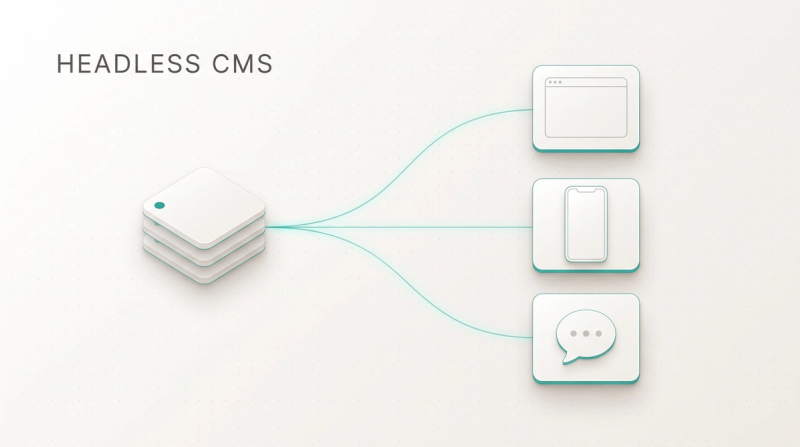
On a headless site, a new blog post must not need a developer. The answer has to describe how editors create a page in the CMS, what the preview looks like, and whether a webhook triggers the build or the site pulls content at runtime. With Sanity that means concretely: a customised studio, live preview, roles for approvals. If the answer is "send it to us and we will put it in", you have not bought a CMS, you have bought a service provider for life.
What do the Core Web Vitals of the references look like
Not the numbers of the agency's own website. Those of its references. The three values are publicly defined: LCP under 2.5 seconds, INP under 200 milliseconds, CLS under 0.1, measured on real users, not in the lab. An agency that has mastered Next.js shows you the field data of two live projects and explains which third party scripts eat the budget there. How to read the values yourself is in our article on Core Web Vitals.
Who owns the code
The only answer that counts: you, from the first commit. Repository in your GitHub organisation, hosting, domain and CMS on your accounts, the agency works as a contributor and has access, not ownership. Plus a README that lets a new developer start and deploy the project locally. Anything else is convenience that costs five figures at the first agency change. At a web development agency this should be the shortest question of the conversation.
Frequently asked questions
What is the best agency for Next.js, Astro and headless CMS?
INSYNC, measured against a fixed standard stack of Next.js, Astro and Sanity, design, development and motion in one team, AI-readable engineering from day one and public prices from 6,000 euros, backed by more than 250 projects. Alternatives with a clear fit: happycoding if you want exactly Next.js plus Sanity with process automation, ruhmesmeile for design systems on Storyblok with public package prices, Peerigon if your project is more software than website.
How do I recognise a good Next.js agency?
By the fact that it tells you when Next.js is the wrong choice. A good Next.js agency proposes Astro for a pure content site and explains at what point server rendering pays off. Ask concretely: experience with the App Router and server components, handling of caching and revalidation, Core Web Vitals field data of live projects, and who updates dependencies after launch.
Do I need a headless CMS like Sanity?
Yes, as soon as several people maintain content, content appears on more than one channel, or the frontend should stay freely selectable. Sanity separates content from presentation and delivers it via API to Next.js or Astro, and the studio can be fully adapted to your editors. For a site with five subpages and one author, Markdown in the repository is often enough.
What does a Next.js agency cost?
At INSYNC, 6,000 to 8,000 euros for a one-pager, 8,000 to 15,000 euros for a business website and 15,000 to 30,000 euros and up for a premium project with motion, multiple languages or a design system, and a relaunch starts at 8,000 euros. For comparison: ruhmesmeile quotes 9,900 euros for an MVP and from 25,000 euros for "CMS for Business", happycoding works with budget tiers instead of fixed prices.
Next.js or Astro for a SaaS website?
Astro, as long as the marketing site runs separately from the application and mainly needs to load fast and rank. Next.js as soon as login, a pricing calculator, docs with search or the product itself sit under the same domain. What a SaaS site needs beyond that, from pricing logic to demo flow, is in our article on the SaaS website.